Among the six products in this series, sodium hydrosulfite is the only one that can set itself on fire. That single fact should shape every decision about how it is stored, transported and handled.
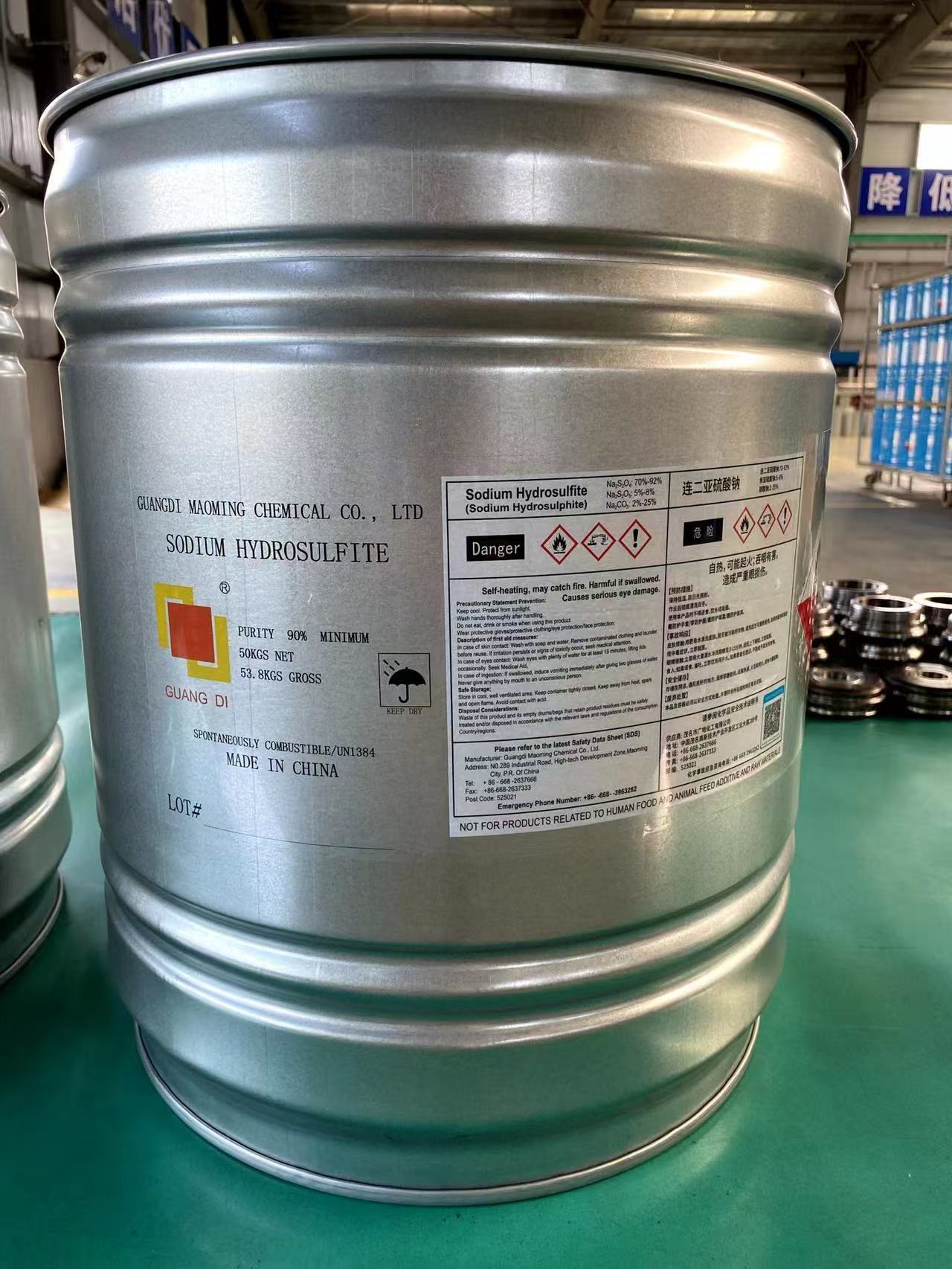
Identification and Hazard Class
- CAS No.: 7775-14-6 | Alias: sodium dithionite, sodium hyposulfite
- Formula: Na2S2O4 | UN Number: UN 1384, Class 4.2 spontaneously combustible
- Appearance: white crystalline powder | Assay: ≥88.0% (typical 88.5–89.0%)
- pH (100 g/L solution): 6.0–7.5 | Iron (Fe): ≤0.01%
- Brands supplied: JINHE, JIACHENG, GUANGDI, ZHONGCHENG, YIHUA
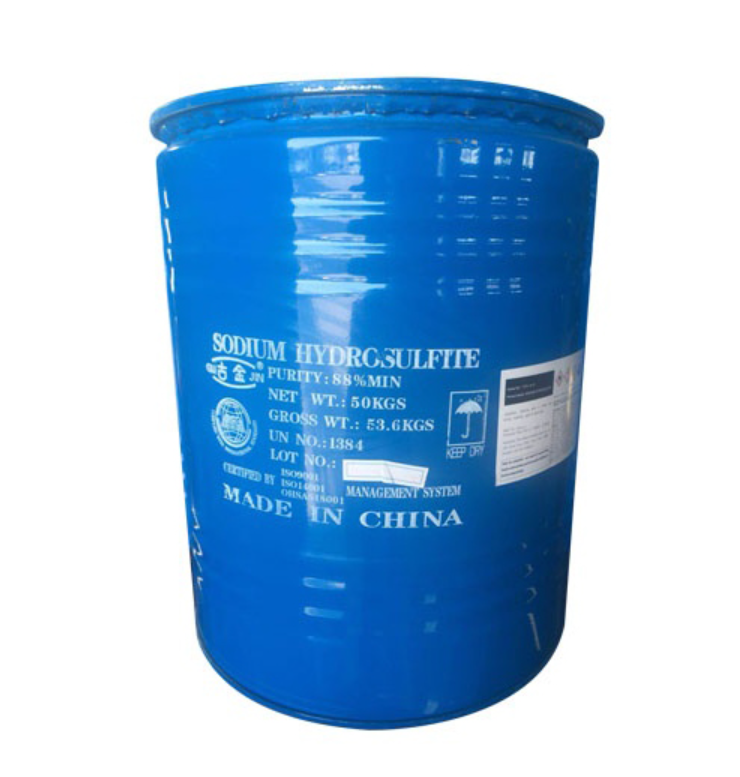
- Packing: 50 kg hermetically sealed iron drums
Why It Self-Heating Products Fail
Sodium hydrosulfite is a powerful reducing agent that reacts exothermically with moisture and oxygen. Trace moisture inside a drum — or a single pinhole that admits humid air — starts a slow oxidation reaction. The heat produced cannot escape from a full drum, so internal temperature rises, which accelerates further decomposition into sulphite and sulphate, releasing more heat and eventually SO2. If the drum is not vented correctly, internal pressure and heat build until ignition. This is why the classic warehouse rules exist and why they are non-negotiable.
Mandatory Storage Controls
- Store below 30°C. Strict temperature control is the single most important requirement.
- Never allow water contact. Even small amounts trigger rapid decomposition and fire risk.
- Keep drums hermetically sealed until the moment of use, and inspect seals before accepting delivery.
- Segregate from acids, oxidisers and combustible materials — the product reacts violently with acids.
- No water-based firefighting. If a drum heats or burns, use dry sand, dry powder or CO2. Water jets can intensify the reaction.
- Ventilate the store and monitor for SO2 odour; never enter an enclosed store after a suspected incident without gas detection.
- Handle damaged drums immediately. Any swollen, leaking or warm drum should be isolated outdoors and treated as an active hazard.
Main Applications
- Textile: vat dyeing of denim and other cellulosics, reductive washing, printing discharge
- Paper: reductive bleaching of mechanical and chemical pulp, kaolin brightening
- Food (food grade): bleaching and preservation of sugar, dried fruit and vermicelli
- Chemical synthesis: reducing agent for dyes, pharmaceutical intermediates and thiourea
- Mining and water: ore flotation and wastewater reductive decolourisation
Packaging and Loading
Packed in 50 kg sealed iron drums. Each 20'FCL holds 21–22 MT, varying slightly by brand and packing configuration. Given the Class 4.2 classification, shipping lines require full dangerous-goods declaration; we ensure GHS-compliant MSDS documentation accompanies every consignment and that drums are stowed away from heat sources during the voyage.
Shelf Life
Often 6–12 months — considerably shorter than the other products covered here — because decomposition is continuous even under good conditions. Buyers should plan procurement against consumption rather than stockpiling, and drums should be used promptly once opened.