Sodium metabisulfite is one of the most useful reducing agents in industrial chemistry and one of the most misunderstood in the warehouse. Its defining property — releasing SO2 in contact with moisture and acid — is what makes it valuable in production and what makes storage mistakes expensive.
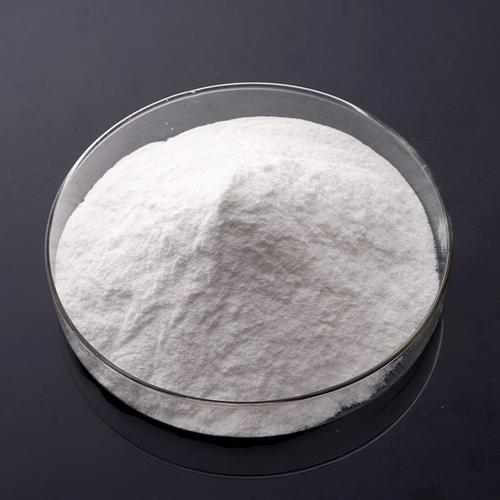
Product Identification
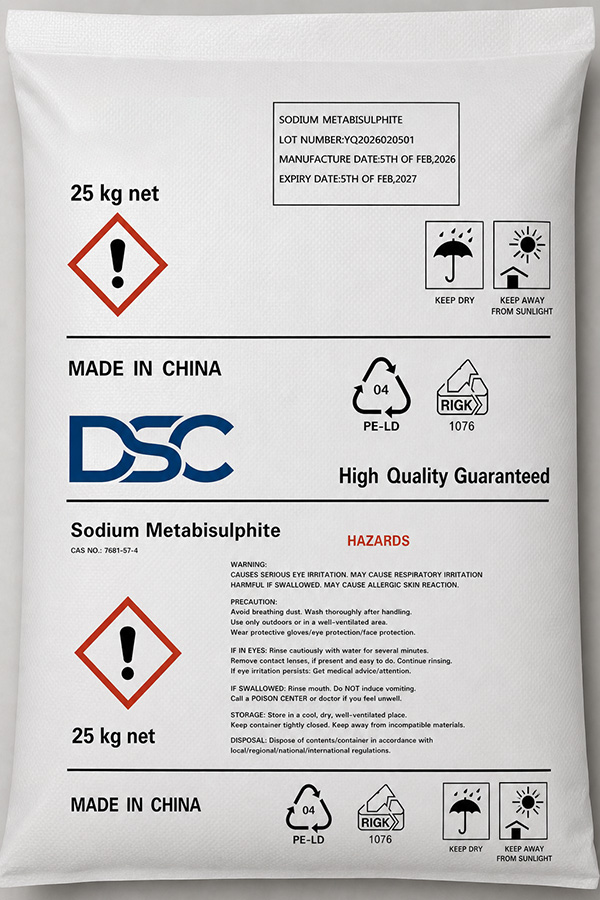
- CAS No.: 7681-57-4 | Alias: SMBS, sodium pyrosulfite, disodium metabisulfite
- Formula: Na2S2O5 | Appearance: white or slightly yellowish crystalline powder with a characteristic SO2 odour
- Assay: ≥96.0% / 98.0% | SO2 content: ≥65.0%
- pH (10% solution): 4.0–4.6 | Moisture: ≤0.5% | Iron (Fe): ≤0.005%
- Brands supplied: DSC, YINQIAO, KAIANG, MALU
How It Behaves in Air
SMBS is hygroscopic and slowly oxidises. In moist air it picks up water and releases sulphur dioxide; simultaneously, oxygen converts part of the sulphite into sulphate, which lowers both assay and reducing power. This is why a strong sharp odour in a storage room is a warning signal, not a normal condition: it means either bags are open, humidity is high, or acidic material is stored nearby.
Main Applications
- Food industry: bleaching, preservation and antioxidant treatment for dried fruit, candied fruit, bakery goods, wine and starch products
- Textile: bleaching, deoxidation, decolourisation and printing/dyeing auxiliary
- Water treatment: dechlorination of effluent and removal of hexavalent chromium and other heavy metals
- Mining: cyanide detoxification in tailings treatment circuits
- Chemical synthesis: reducing agent and raw material for sodium sulphite and SO2 generation
- Paper and leather: pulp bleaching and hide bleaching operations
Storage and Handling Rules
- Store cool and dry — keep RH low. Moisture is the trigger for every failure mode this product has.
- Ensure good ventilation. SO2 accumulation in enclosed spaces is a genuine occupational hazard, not just an odour issue.
- Segregate from acids, oxidisers and nitrates. Acid contact releases SO2 rapidly; oxidisers destroy the reducing capacity.
- Keep the packaging hermetically sealed. Partial bags should be transferred to airtight drums rather than folded over.
- Use corrosion-resistant scoops and transfer equipment, since the acidic powder attacks ordinary steel over time.
- Protect food-grade lots separately so that audit traceability is never in question.
Packaging and Loading
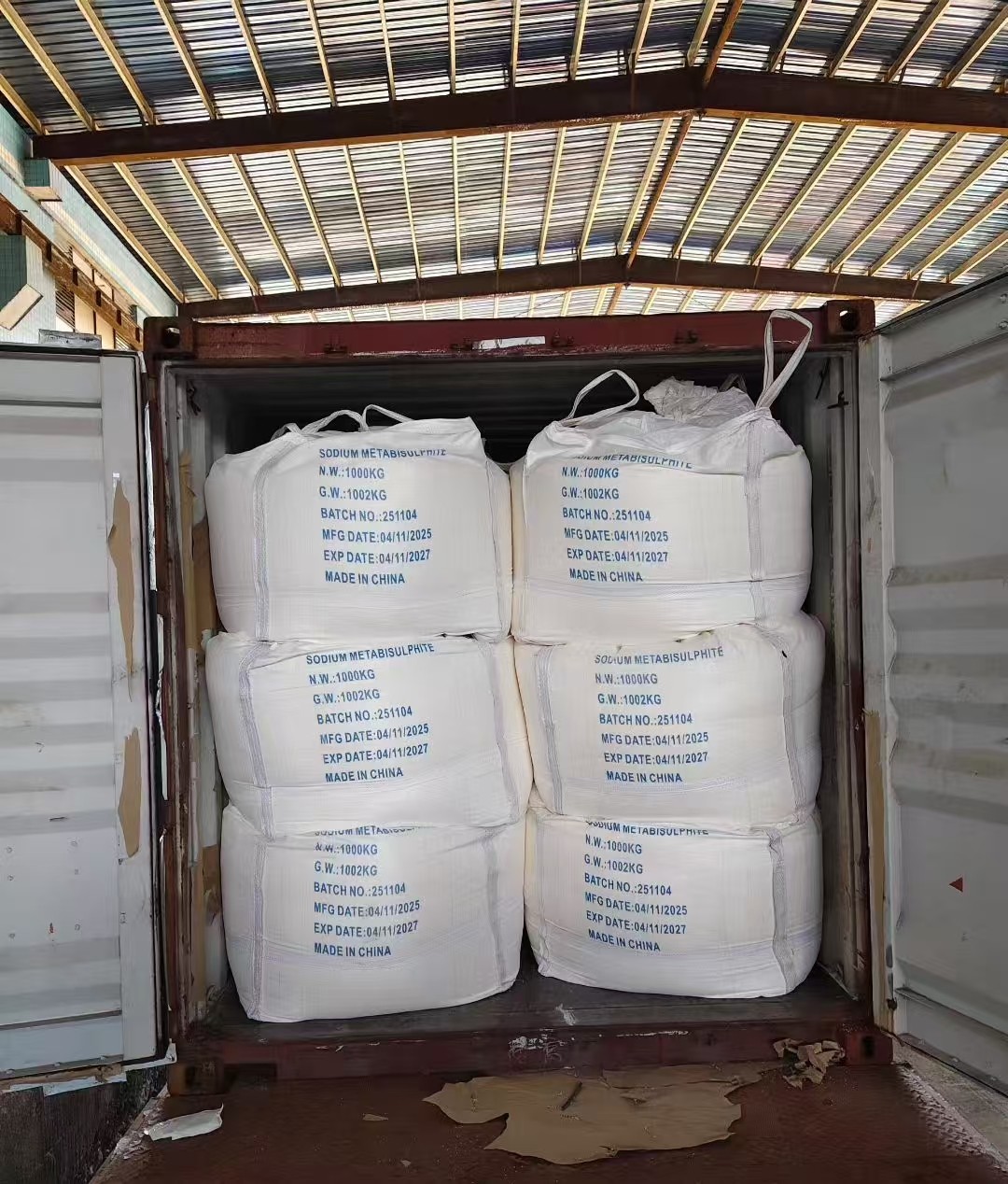
Standard packing is 25 kg PP bags with liner plus 1000 kg jumbo bags. Loading: 27 MT per 20'FCL without pallets / 25 MT with pallets. We recommend moisture-resistant pallet wrapping for wet-season shipments, and note that SO2-sensitive goods such as certain foodstuffs and metals should not share the same container.
Shelf Life
Typically 12–24 months depending on grade and packaging integrity, with the shorter window applying wherever bags are routinely opened. Because assay decline correlates directly with odour development, a simple sensory check at goods-in is a surprisingly effective first inspection method.