Sodium hexametaphosphate is sold on its sequestering power — the ability of its long polyphosphate chain to grab calcium and magnesium ions. Storage conditions determine whether that chain is still intact by the time it reaches your dosing line.
Why Moisture Is the Enemy
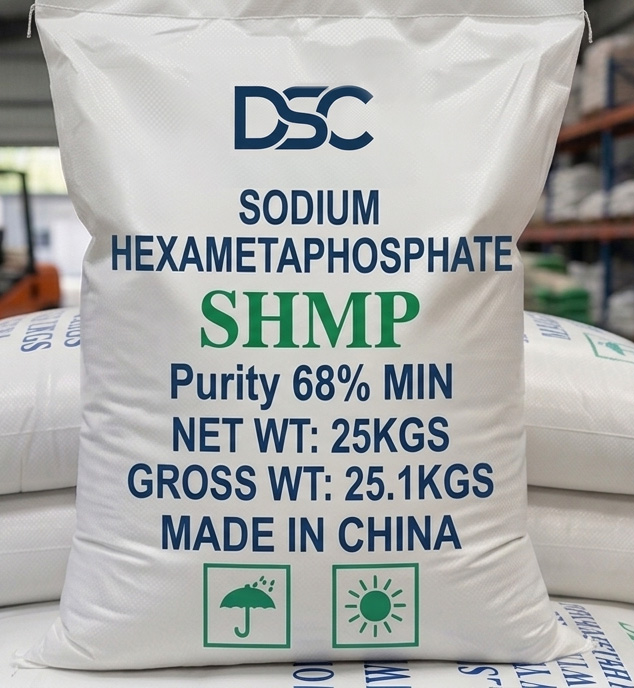
SHMP (E452i) is a glassy polyphosphate that is markedly hygroscopic. When it absorbs atmospheric moisture the surface turns sticky, the material agglomerates into glass-like lumps, and eventually hydrolyses: the long metaphosphate chain breaks back into shorter polyphosphates and finally orthophosphate. Reversion directly reduces the chelating value the customer is paying for, and dissolved material becomes acidic.
Product Identification
- CAS No.: 10124-56-8 | Alias: SHMP, Graham's salt, sodium polymetaphosphate
- Appearance: white powder or colourless transparent flakes / glassy granules
- Total phosphate (as P2O5): ≥68.0% | Inactive phosphate: ≤7.5%
- pH (100 g/L solution): 5.8–7.0 | Water insolubles: ≤0.05–0.15%
- Grade: DSC industrial grade, with food-grade (E452i) specification available
Main Applications
- Food industry (E452i): water retention in meat, stabiliser in dairy, clarity agent in beverages, texture improver in ice cream
- Water treatment: scale inhibition, softening and anti-scalant dosing in RO systems
- Industrial dispersion: dispersant in ceramics, coatings, paper and textile printing
- Construction: cement hardening accelerator and set-speed modifier
- Detergents: builder and chelating agent improving wash performance
Storage Rules for Glassy Phosphates
- Treat it as a moisture-sensitive product, always. Target warehouse RH below 60%.
- Reseal immediately after each withdrawal. An open bag left overnight in humid air is usually enough to start surface agglomeration.
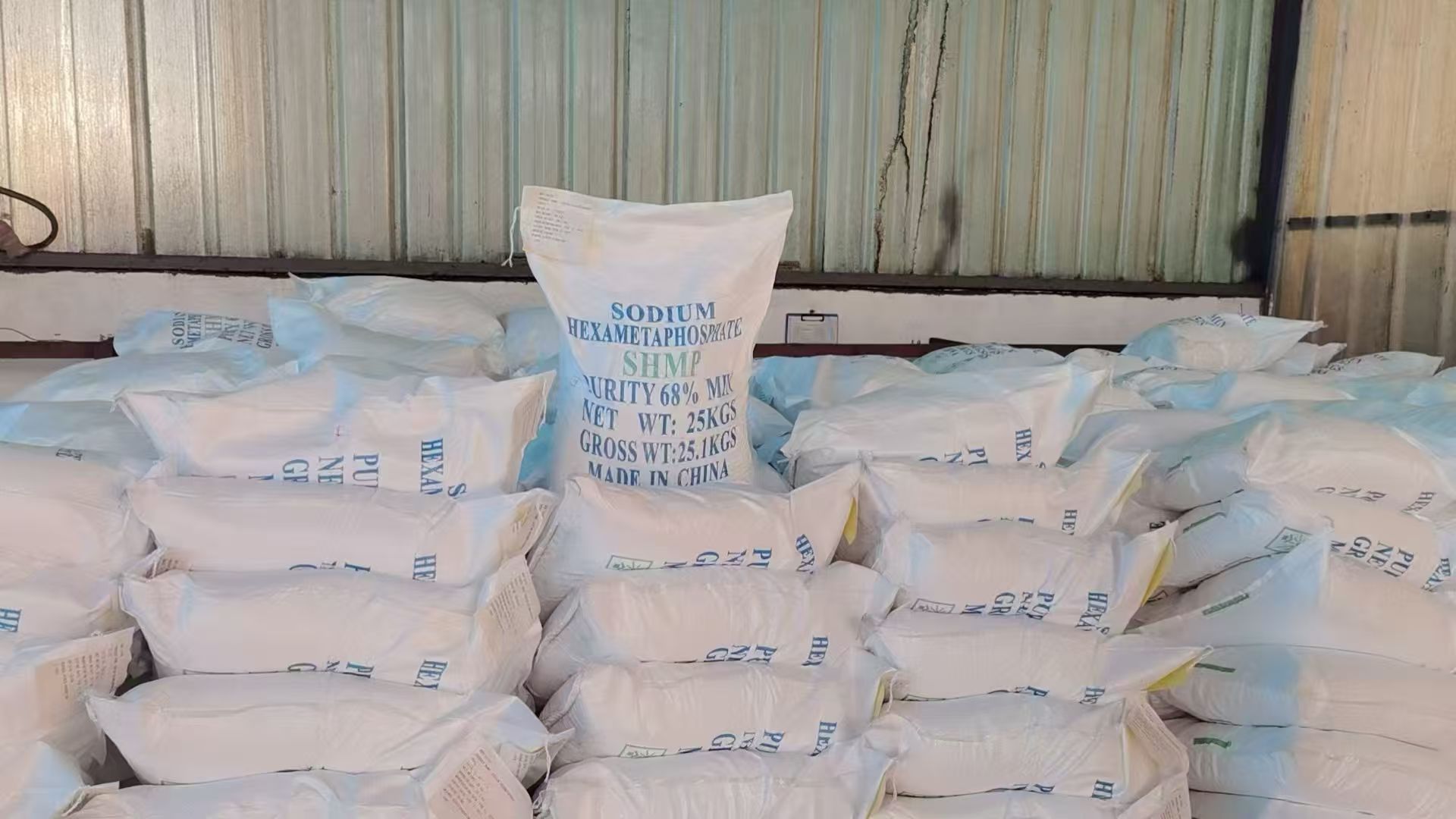
- Use pallets and keep clear of walls and floors to allow air circulation around all sides.
- Avoid steam and wash-down areas. Food plants in particular should keep SHMP away from CIP and hot-water zones.
- Never pre-make concentrated solution for long storage. Prepare solution close to use; if a stock solution is unavoidable, hold it below one week and keep it agitated.
- Avoid prolonged solution heating. Elevated temperature accelerates hydrolysis and chain reversion far faster than dry storage ever will.
Solution Make-Down Tip
Dissolve SHMP by adding powder gradually into a strong vortex of cold or lukewarm water. Adding water to powder, or dumping an entire bag at once, produces fish-eye lumps that can take hours to dissolve. Expect a slightly acidic solution and clean, well-agitated dosing equipment.
Packaging and Loading
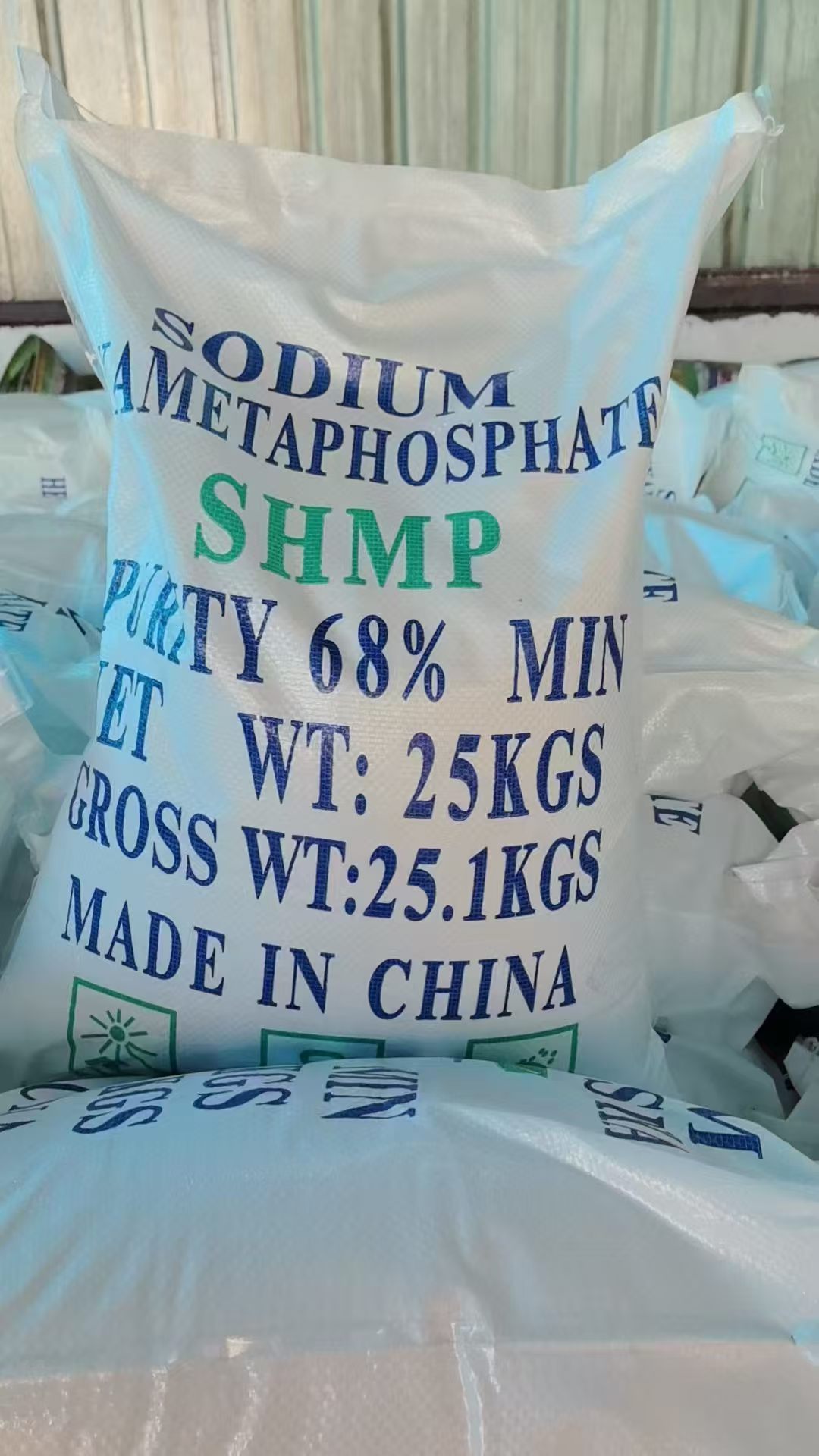
Packed in 25 kg kraft paper bags or PP woven bags with inner liner. Loading: 27 MT per 20'FCL without pallets / 25 MT with pallets. Moisture-barrier liners plus container desiccant are standard recommendations for long-haul refrigerated or humid routes.
Shelf Life
24 months in original sealed bags stored dry. Because the chain-degradation product is invisible, regular assay verification of aged lots is the only reliable way to confirm sequestering value is still within specification.