Most buyers treat sodium bicarbonate as a harmless pantry chemical and are surprised when a lot that tested 99.2% at loading arrives at destination at 97%. The cause is rarely adulteration — it is slow thermal decomposition during storage and transit.
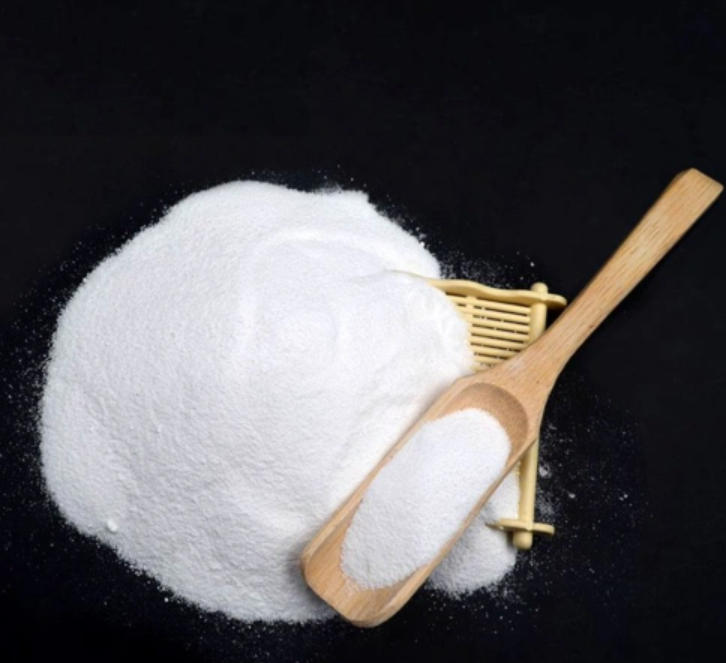
The Chemistry Behind Assay Loss
Sodium bicarbonate is thermally unstable in a way that most commodity salts are not. Above roughly 50°C it begins converting to sodium carbonate, releasing water and carbon dioxide:
2 NaHCO3 → Na2CO3 + CO2 + H2O
The risk is not only high air temperature. Friction-generated heat inside a ship's hold, direct sun on a container, or storage beside a boiler room all push the powder past its comfort zone. Hot spots lower assay and simultaneously raise pH — which matters enormously for food processors who dose against a certified pH window.
Product Identification
- CAS No.: 144-55-8 | Alias: Baking soda
- Formula: NaHCO3 | Appearance: white fine crystalline powder
- Assay: ≥99.0% (food grade, GB 1886.2-2015) / ≥98.5% (industrial grade, GB/T 1606-2008)
- pH (10 g/L, 25°C): 8.3–8.6 food grade | Loss on drying: ≤0.20% food grade
- Brands supplied: DSC, HAITIAN, HAIHUA, YUHUA, YINQIAO, MALAN
Main Applications
- Food industry: leavening agent in bread, cakes and biscuits; pH regulator in processed food
- Pharmaceutical: antacid and raw material for sodium-based preparations
- Water treatment: pH correction and heavy-metal precipitation in acidic effluent
- Industrial: dry-powder fire extinguishers, detergent builder, textile dyeing and finishing
- Animal feed: rumen buffer improving digestive function in dairy herds
Storage Requirements
- Keep below 50°C — without exception. Ideally store at ambient temperature below 35°C.
- Keep absolutely dry. Moisture triggers caking and accelerates the bicarbonate-to-carbonate conversion.
- Ventilate the storage room. Any CO2 released must not accumulate in enclosed silos or closed containers.
- Segregate from acids. Contact with acids produces rapid CO2 evolution and can pressurise packaging.
- Separate food-grade from industrial-grade lots, including separate scoops and transfer equipment.
- Rotate stock strictly. Opened bags lose quality measurably faster than sealed ones.
Packaging and Loading
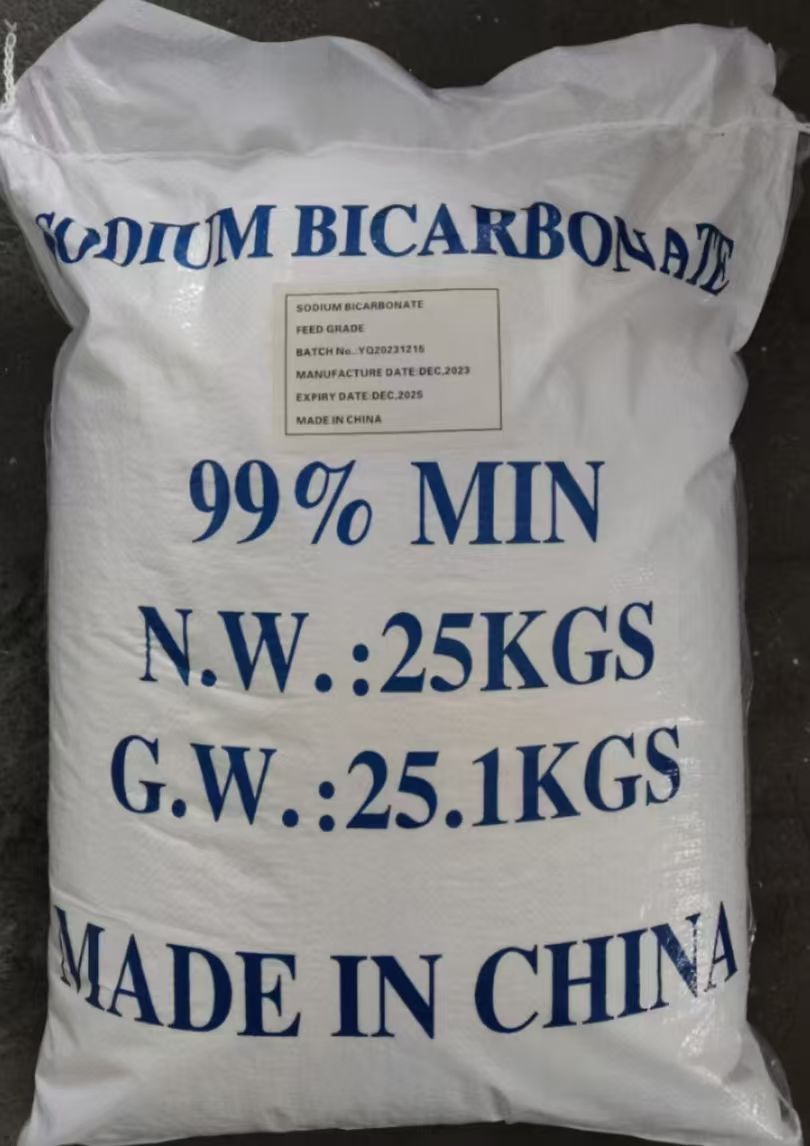
Supplied in 25 kg PP bags and 1000 kg jumbo PP bags, both with moisture-barrier liner. Standard container stuffing applies; for hot-climate routes we advise booking shaded stowage away from the vessel's heat sources and avoiding top-of-stack placement.
Shelf Life
24 months in unopened original packaging stored cool and dry. Because the loss mechanism is thermal, not microbial, protecting bicarbonate from heat is far more valuable than any other storage measure you can take.