Sodium acetate trihydrate is roughly 40% water by weight in crystal form — three molecules locked into every unit. That is not a defect; it is the product. But it also means SAT behaves very differently from anhydrous salts during storage: it loses water to dry air, and visible crusting starts long before the chemical quality actually fails.
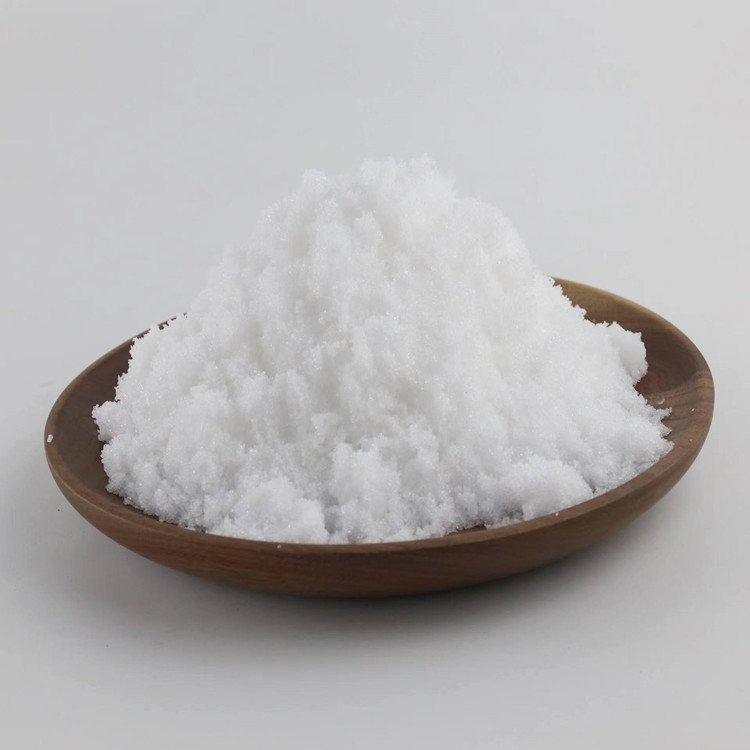
Product Identification
- CAS No.: 6131-90-4 | Alias: SAT, Sodium Acetate 3H2O
- Formula: CH3COONa·3H2O | Appearance: colourless transparent crystals or white crystalline powder
- Assay: ≥99.0% (food grade) / ≥98.0% (industrial grade)
- Loss on drying: 38.0–41.0% | pH (50 g/L, 25°C): 7.5–9.0
- Grade supplied: DSC industrial grade | Melting point approx. 58°C
Why Efflorescence Happens
Efflorescence is the loss of water of crystallisation to the surrounding air. Because the melting point of the trihydrate is only about 58°C, warm storage combined with low humidity drives water out of the crystal, leaving a dry white powdery crust on the surface. This looks alarming but is mostly cosmetic. The more serious failure mode is the opposite direction: if bags absorb moisture first and are then dried repeatedly, dissolved material recrystallises into hard agglomerates that resist dissolution in the dosing tank.
Main Applications
- Water treatment: pH regulator, buffer and corrosion inhibitor — widely used as a readily biodegradable external carbon source for denitrification
- Textile and dyeing: dyeing assistant and pH buffer improving dye uptake and colour fastness
- Leather tanning: neutraliser and tanning assistant
- Electroplating: buffer and complexing agent stabilising bath pH
- Concrete and de-icing: antifreeze admixture accelerating early strength; winter runway de-icer
Correct Storage Practice
- Store below 40°C. Proximity to boiler rooms, steam lines or container roofs in direct sun will trigger melting and re-crystallisation.
- Maintain moderate humidity (45–70% RH). Extremely dry air accelerates efflorescence and dust formation.
- Keep bags tightly closed. Open bags both lose water and gain atmospheric CO2, slowly raising insolubles.
- Avoid contact with strong acids, which release acetic acid vapour and create odour complaints in the warehouse.
- Pallet-stack and use FIFO. Bottom-bag compaction in tall stacks worsens agglomeration during long storage.
Packaging and Loading
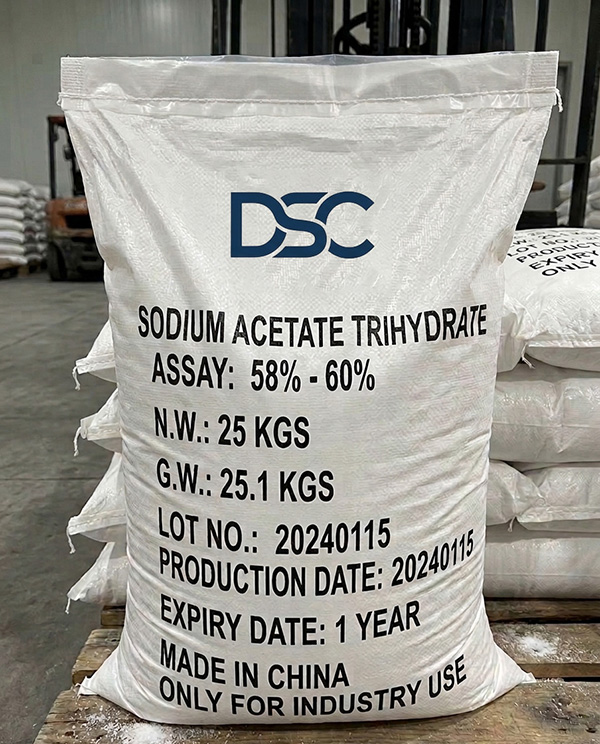
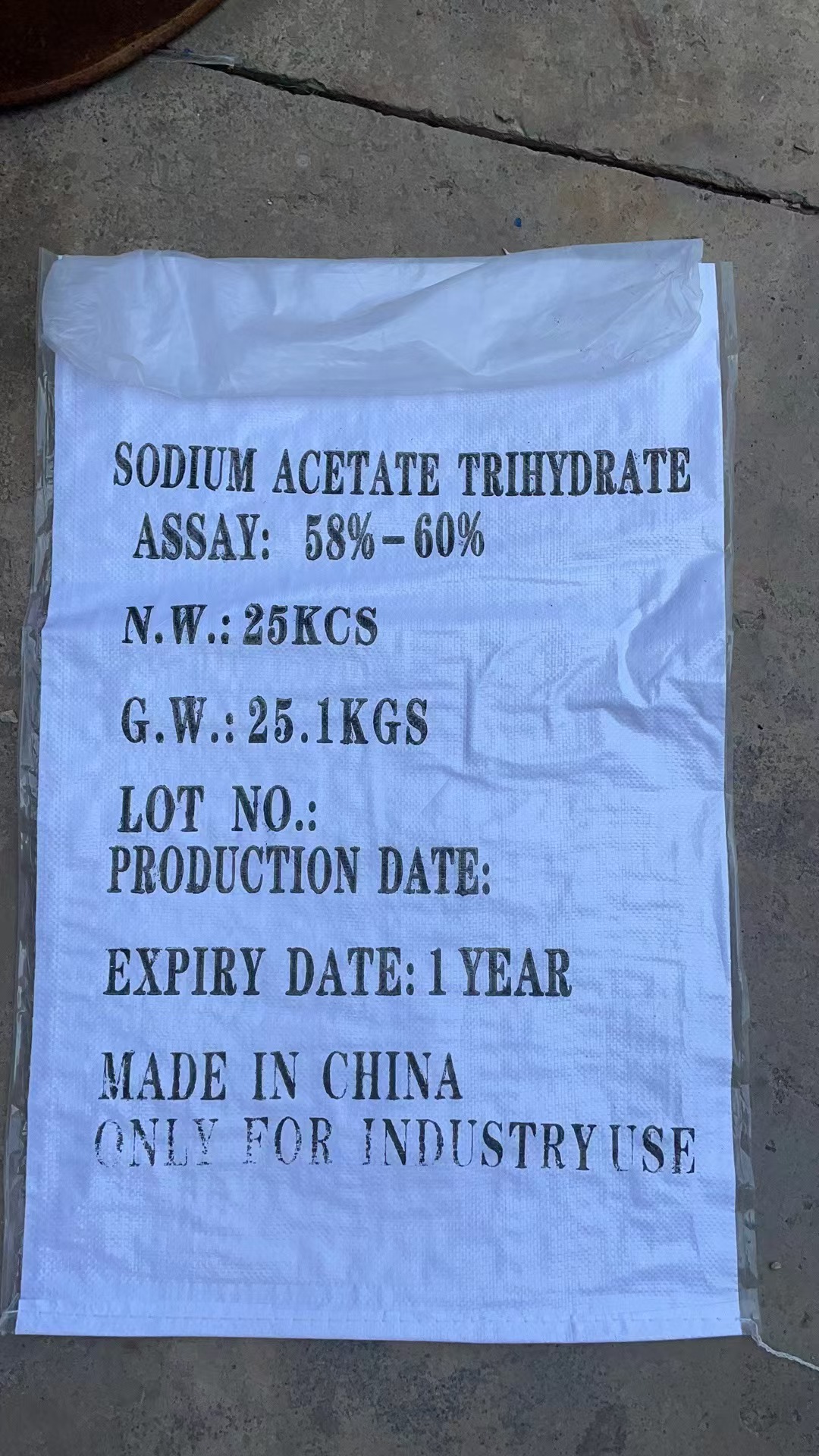
Packed in 25 kg PP bags with inner liner. Loading: 27 MT per 20'FCL without pallets, 25 MT with pallets. Because the material is not classified as hazardous, standard dry-container transport applies — but we still line-load with desiccant for tropical destinations to stabilise container humidity during the voyage.
Shelf Life and Handling Note
Expect 24 months in original sealed packaging stored cool and dry. Where dissolved dosing is used on site, prepare solutions with warm water and agitate adequately; the trihydrate dissolves readily, though its high dissolution enthalpy makes the solution noticeably cold.