Citric acid monohydrate looks like the most forgiving organic acid in a warehouse — until it arrives as a solid block after a six-week voyage through the tropics. Understanding the single water molecule locked in its crystal lattice is the whole secret to storing it correctly.
What "Monohydrate" Actually Means for Your Warehouse
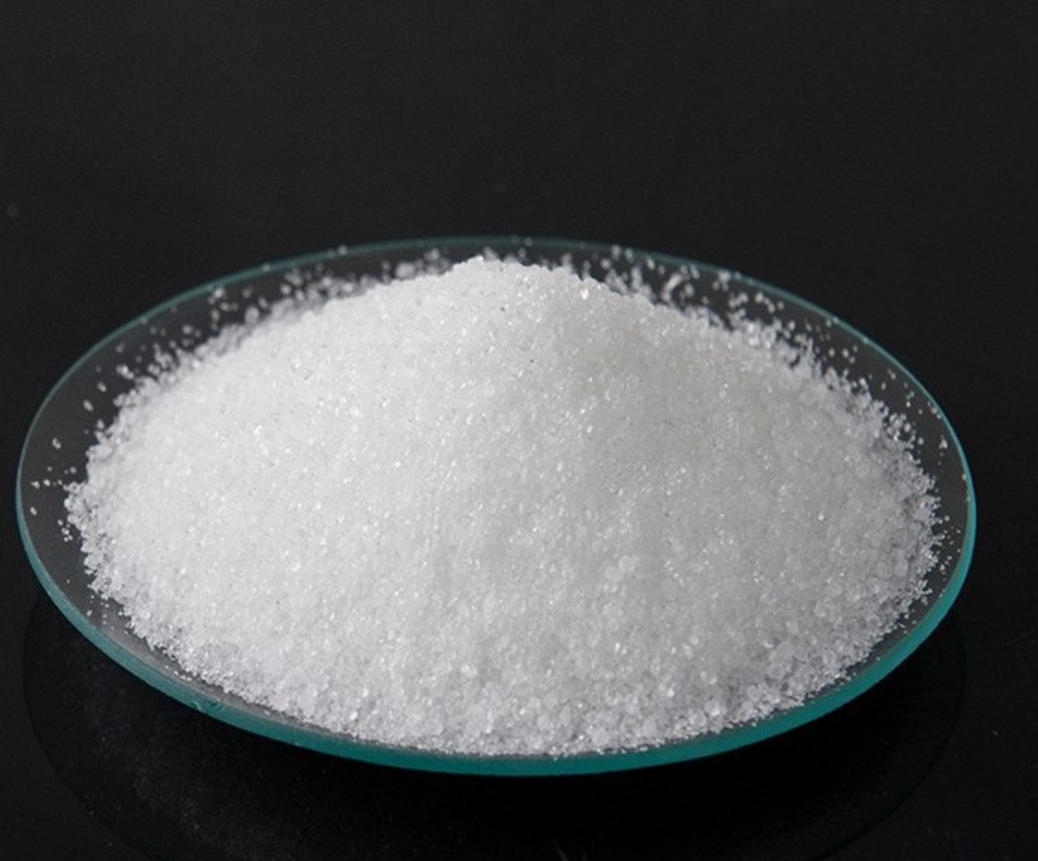
The extra water of crystallisation (about 8.6% of the molecule) is what separates citric acid monohydrate from the anhydrous grade. It is bound inside the crystal, but the bond is not unbreakable: once ambient relative humidity climbs and temperatures swing inside a container, moisture migrates to the crystal surface, dissolves a thin film of acid, and then re-dries as the temperature falls. The result is crystal bridging — the familiar hard lumps buyers complain about.
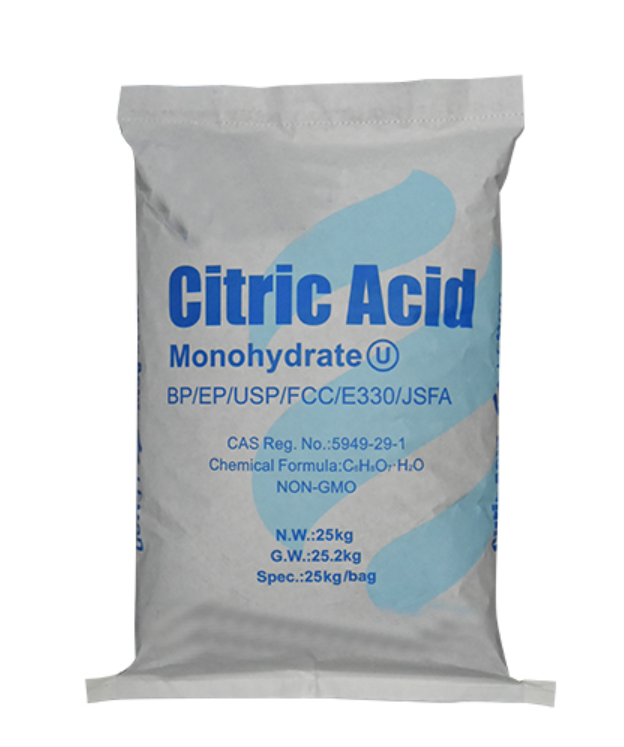
- CAS No.: 5949-29-1 | E number: E330
- Formula: C6H8O7·H2O | Appearance: white crystalline powder or granules
- Grades available: Food grade (FCC / E330 / GB1886.235), industrial grade
- Brands supplied: TIANTIAN, YINGXUAN and other qualified Chinese producers
- Key behaviour: freely soluble in water, hygroscopic above roughly 65% RH
Main Applications
- Food & beverage: acidity regulator and flavour enhancer in carbonated drinks, juices, jams, confectionery and dairy
- Pharmaceutical: effervescent tablet acidulant and chelating excipient compliant with USP/BP
- Cosmetics & personal care: pH adjuster and chelator in shampoos, creams and toothpaste
- Industrial: metal-ion sequestration in cleaning formulations and boiler descaling
Storage Rules That Actually Prevent Caking
- Keep relative humidity below 65% — this single number prevents most claims. Use a hygrometer in the storage room, not guesswork.
- Control temperature swings. Store at a stable 15–30°C. The wet-dry cycle caused by day/night temperature cycling does more damage than steady heat.
- Never store on bare concrete. Always use pallets with a moisture barrier; concrete floors wick water upward into the bottom bags.
- Keep bags sealed until use. Once opened, reclose immediately or transfer to an airtight container — 25 kg PP bags are water-resistant, not waterproof.
- Segregate from alkaline products. Never stack citric acid next to caustic soda, sodium carbonate or lime; cross-contamination triggers premature neutralisation.
- Food-grade lots need segregation. Store food-grade material separately from industrial-grade stock and label both clearly to protect audit trails.
Packaging and Container Loading
Standard packing is 25 kg PP woven bags with inner PE liner. A 20'FCL carries 25 MT without pallets or 23 MT with pallets. For shipments to West Africa, Southeast Asia and South America — where humidity at destination is high — we recommend desiccant inside the container and shrink-wrapped pallets; both are low-cost additions that remove most caking risk.
Shelf Life
Under dry, sealed, temperature-stable conditions, citric acid monohydrate retains specification for 24 months. Even when minor lumps form, the material usually passes assay because caking is physical rather than chemical — a gentle mechanical break and sieving restores flowability. Operationally, run first-in-first-out and audit the oldest lots every six months.