When a discharge permit tightens total nitrogen, the first thing that changes at the plant is the chemical bill: an external carbon source is dosed into the anoxic zone so denitrifying bacteria have something to eat. Sodium acetate trihydrate has become the default choice at many municipal plants, and the reasons are practical rather than fashionable.
Why Denitrifiers Prefer Acetate
- Immediately available: acetate is a VFA that enters the metabolism directly - no adaptation period, which matters when nitrate creeps up on Monday morning and the permit report is due Friday.
- Cold-water performance: methanol-fed systems slow down sharply below about 12°C because the methanol-oxidizing population thins out; acetate consumers stay active much lower. Northern-climate plants feel this every winter.
- Safe to handle: no flash point, no HAZMAT class, no explosion-proof dosing room. The insurance and engineering savings alone often pay the chemical premium.
- Predictable COD: with assay at 58-60% (trihydrate basis), the COD contribution per kilogram is stable lot to lot, which keeps dosing curves honest.
Getting the Dose Right
A workable starting point: every mg/L of nitrate-N to be removed consumes roughly 4-5 mg/L of COD, and trihydrate SAT delivers about 0.47 kg COD per kg of product at 58% assay. Dose slightly above the stoichiometric need, watch the anoxic-zone ORP and effluent nitrate, then trim. Overdosing wastes chemical and pushes carbon into the aerobic zone - the plant pays twice.
What to Check on Delivery
- Assay 58-60% is the trihydrate standard; a "dry" sodium acetate offer at 99% is a different product with different dosing math - confirm which you are buying.
- pH of a 5% solution should sit in the 7.5-9 band; wide swings flag contaminated stock.
- Packed 25 kg PP bags by DSC Trading; 27 MT per 20' FCL without pallets, 25 MT palletized.
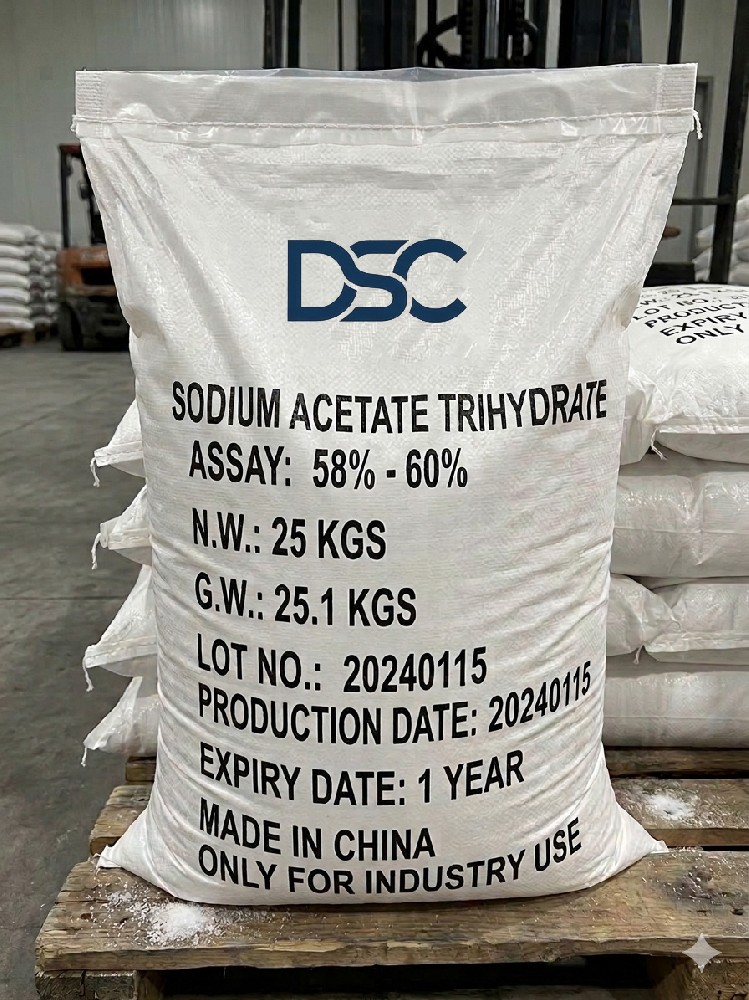

DSC Trading supplies SAT specifically graded for wastewater use, with COA and MSDS issued per lot. Send us your nitrate load and target effluent TN - we will run the dosing estimate with you before the first container ships.